

Can I Add a Battery to My SunPower System?
Many SunPower homeowners ask, “Can I add a battery to my SunPower system?” when they want to use more of their solar power after sunset or keep essential circuits running during an outage. The answer depends on the equipment already installed and how your system connects to the grid.
Yes, in most cases you can add a battery to your SunPower system. The key is your existing inverter and overall system design, which determine whether the retrofit uses AC coupling or DC coupling. A professional site evaluation confirms the practical path, and in most situations storage can be added without replacing the panels you already own.
California’s NEM 3.0 rules make battery compatibility more important, because exported energy is now compensated under the state’s avoided-cost framework. A battery can help you use more of the power your panels produce. It also reduces your reliance on evening grid purchases. And it can keep essential circuits running during Public Safety Power Shutoff events. Before comparing brands or costs, start by identifying the inverter and electrical setup that control how your solar power is converted and distributed.
As a SunPower award-winning partner serving Central and Southern California, Sun Solar evaluates existing systems, confirms inverter compatibility, and manages the permitting and integration work. This guide walks through compatibility, your storage options, the cost, and how a battery fits under NEM 3.0 so you can decide with confidence.
Can I Add a Battery to My SunPower System? Yes, If the Inverter Is Compatible
Yes, in most cases homeowners can add a battery to an existing SunPower system. The main qualifier is compatibility. The solar array, inverter, wiring, monitoring equipment, and utility interconnection must work together before a retrofit is approved and installed. The answer starts with identifying the inverter that controls your current system.
A retrofit is generally possible when the existing inverter can support the battery design. Some installations may need an additional control device, updated electrical equipment, or changes to the way solar power reaches the home and the battery. That does not necessarily mean your system needs to be replaced. It means the retrofit should be designed around the equipment already on your property, rather than choosing a battery first and trying to make it fit later.
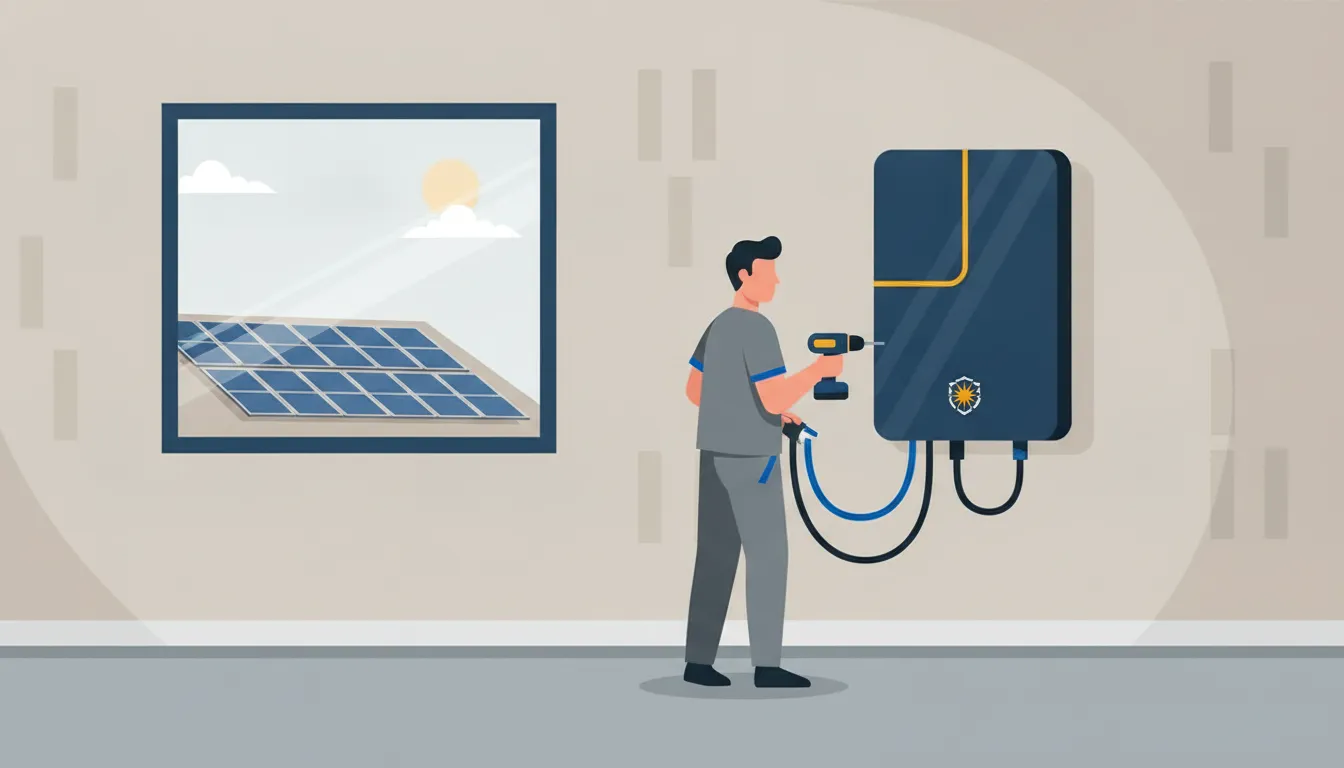
Why your inverter matters
The inverter converts the electricity produced by your solar panels into a form your home can use. It also affects how the battery charges, discharges, and communicates with the rest of the system. The model, age, capacity, and installation design can all influence which storage options are practical. Reviewing the inverter label and original system documentation is a helpful first step.
A professional evaluation is still needed to confirm the complete system design. Sun Solar evaluates existing systems before recommending a retrofit, confirming the inverter model and available electrical capacity before any equipment is selected. Explore the options for home battery storage to understand how storage may support your household’s energy goals.
AC coupling and DC coupling
Battery retrofits typically use either AC coupling or DC coupling. With AC coupling, the battery connects on the alternating-current side of the system, usually through its own battery inverter. This approach is useful when the existing solar inverter remains in place. The battery is added alongside it, which makes AC coupling a practical choice for many established SunPower arrays.
With DC coupling, solar power reaches the battery on the direct-current side before being converted for household use. This can reduce conversion steps, but it requires compatible equipment and a suitable power-management setup. A site evaluation can compare both paths and identify a configuration that works with the system you already own.
SunPower Storage vs. Third-Party Batteries like Tesla Powerwall and Enphase
The best battery for a SunPower system is not always the one made by the same brand. SunPower SunVault, Tesla Powerwall, and Enphase can each be considered for a retrofit. The right choice depends on how your panels connect to the home, which inverter is installed, and what you want backup power to do.
How SunVault, Powerwall, and Enphase differ
SunPower SunVault is a natural option for homeowners who want storage within the SunPower ecosystem and prefer one coordinated equipment path. Tesla Powerwall is a widely used third-party option that can be evaluated for compatible SunPower systems, particularly when whole-home backup and a straightforward battery platform are priorities. Enphase is another established option when the existing system uses, or can be integrated with, Enphase microinverter technology. These are not interchangeable plug-in products, so a site assessment should identify the existing inverter, panel layout, electrical service, critical loads, and available space before choosing a battery.
| Factor | SunPower SunVault | Tesla Powerwall | Enphase |
|---|---|---|---|
| Best fit | One coordinated SunPower ecosystem path | Whole-home backup with a widely used battery platform | Systems that use or can integrate with Enphase microinverters |
| Integration style | Can pair with compatible SunPower equipment | AC-coupled or DC-coupled depending on system design | AC-coupled, works alongside existing microinverters |
| Backup coverage | Scalable to household- or circuit-level panels | Whole-home or selected-circuit backup options | Modular, scaled by number of battery units |
| Ideal installer | Authorized SunPower partner | Certified Tesla installer | Enphase-certified installer |
Sun Solar installs both Tesla Powerwall and SunVault, and can help homeowners compare those choices with other compatible equipment. Reviewing your options for home battery storage before choosing a model helps ensure the battery works with the equipment you already own. It should also support your backup priorities and fit California’s changing energy rules.
How Much Does It Cost to Add a Battery to Your SunPower System?
Battery retrofit pricing varies widely with equipment, battery capacity, wiring, and labor. Smaller systems and straightforward installations cost less, while larger batteries, main-panel upgrades, and complex integrations cost more. A system-specific quote is the only reliable way to know the total, and incentives can reduce the final price.
That figure is not a quote. A contractor needs to review your SunPower system, inverter, utility connection, electrical panel, and backup-power goals before pricing the work. The battery capacity you need for a few essential circuits is different from the capacity required to support most of a home overnight. Permitting, labor, monitoring equipment, and the design of the retrofit can also affect the total. For a closer look at equipment and installation variables, see our guide to the cost to retrofit a solar battery.
Federal tax credit considerations
The federal Residential Clean Energy Credit allows eligible homeowners to claim 30% of the cost of qualified clean energy property. This includes a battery when it is paired with a residential solar system. The U.S. Department of Energy explains the credit and qualifying property in its Residential Clean Energy Credit guidance. Eligibility, timing, and how the credit applies to your tax situation should be confirmed with a qualified tax professional. Treat the credit as a potential reduction in after-tax cost, not an instant discount on the installation invoice.
California SGIP rebates
Some California residential storage projects may also qualify for rebates through the Self-Generation Incentive Program, or SGIP. The program can provide incentives for eligible energy storage installations, with particular support categories that may apply to certain homeowners and fire-prone areas. Review current requirements and funding availability through the California Public Utilities Commission SGIP information before assuming a rebate will be available. Programs change, and qualification can depend on location, household circumstances, equipment, and application timing.
If the upfront price is difficult to manage, ask about financing solar battery retrofits and compare the total repayment cost, not just the monthly payment. A careful evaluation should show the gross installation price, potential incentives, financing charges, warranty coverage, and what the battery is designed to power.
Is a Battery Worth It Under NEM 3.0?
For many California homeowners, a battery can make an existing solar system more valuable under NEM 3.0 because the timing of energy use now matters more. Under California’s Net Billing Tariff, exported solar is compensated at avoided-cost rates, so storing midday surplus for evening use improves self-consumption and reduces reliance on grid purchases.
During the day, solar panels may produce more electricity than your home needs. Without storage, that excess power is sent to the grid. Under California’s Net Billing Tariff, the compensation for exported energy is based on an avoided-cost calculator. That rate is lower than the full retail price you pay when buying electricity back. The California Public Utilities Commission explains the current structure at its NEM program resource.
Why self-consumption matters
The value of storage depends on your usage pattern, utility rate structure, system design, and battery settings. Homeowners who regularly use electricity after sunset may have a stronger reason to consider storage than someone whose largest energy loads occur during daylight hours. Your installer can review interval usage, solar production, and the existing inverter before recommending a battery size or operating strategy. A properly designed system may also help keep essential circuits running during an outage, adding resilience beyond utility-bill management.
A major shift in battery adoption
NEM 3.0 has changed how homeowners think about solar-plus-storage. Sun Solar’s customer guidance identifies a rise in battery attachment rates from 10% to 60% as storage became a more central part of new solar planning. That figure does not mean every existing solar owner needs a battery. It does show how the economics and design conversation have shifted toward using more solar energy on site. If your priorities include reducing evening grid reliance, improving resilience, or making better use of an existing solar array, a battery may be worth evaluating.
What About Battery Backup During Wildfire and PG&E Power Shutoffs?
A battery can help keep essential parts of the home operating during a Public Safety Power Shutoff, or PSPS. Solar panels alone typically stop producing usable power when the grid is down, but a properly integrated battery stores solar energy and supplies selected circuits after the home disconnects from the grid.
Utilities may shut off power as a wildfire-prevention measure, sometimes while weather and access conditions make an outage especially difficult. With a compatible battery retrofit, stored solar energy can support priority loads such as the refrigerator, lights, internet equipment, medical devices, garage door opener, and selected outlets. The exact appliances that remain available depend on the battery size, the home’s electrical design, and how the backup circuits are configured.
Sun Solar’s guidance is that solar panels paired with battery backup provide a critical lifeline during wildfire-related power shutoffs. You can read more about battery storage for California outages and its role in a broader wildfire preparedness plan.
What happens when the grid goes down?
A battery system is designed to detect the loss of utility power and isolate the home from the grid. Once that separation occurs, the battery can provide electricity to the circuits selected for backup. During daylight, solar production may help recharge the battery and support those loads. At night or during periods of smoke, cloud cover, or reduced production, the battery’s available capacity becomes the limiting factor.
This is why a retrofit evaluation should begin with your priorities, not just the largest battery available. A homeowner who needs refrigeration, communications, and basic lighting may have a different design than someone who wants to support a well pump, heating and cooling equipment, or other high-demand appliances.
If your SunPower system is already installed, the next step is to confirm its inverter and electrical compatibility, then select a battery and backup configuration that fits your goals. Our guide explains how to add a battery to your existing system and what to consider before installation. A local site evaluation can also identify permitting, panel, and critical-load requirements before any equipment is selected.
Frequently Asked Questions
Can I add a battery to my existing SunPower system?
In many cases, yes. The first step is checking your existing inverter, system design, and electrical equipment. Those details determine whether the retrofit can use AC coupling, DC coupling, or requires additional modifications. A site evaluation can confirm compatibility before installation.
What type of battery works with a SunPower system?
Several battery options may work, including AC-coupled systems that integrate with an existing solar array. The right choice depends on your inverter, available installation space, backup goals, and how you use electricity. A compatible system can be designed around your current equipment rather than replacing the entire array.
How does adding a battery affect NEM 3.0 incentives?
Under California’s Net Billing Tariff, exported solar energy is compensated using avoided-cost rates, so storing more solar for later use can improve self-consumption. The California Public Utilities Commission explains the current framework at cpuc.ca.gov/nem. Your utility, interconnection status, and battery controls should be reviewed before installation.
Is it worth adding a battery to a SunPower system?
A battery may be worthwhile if you want backup power, greater use of your solar energy after sunset, or protection during Public Safety Power Shutoff events. The value depends on your electricity usage, utility rate structure, battery capacity, and installation cost. A system-specific evaluation is more useful than a one-size-fits-all savings estimate.
Schedule Your SunPower Battery Retrofit Evaluation
Your existing system may be a strong starting point for adding storage, but the right path depends on its inverter and overall configuration. A system review can clarify compatibility, battery options, and the next steps for improving energy resilience under California’s current utility rules. To book a free evaluation and battery retrofit quote, call Sun Solar at 661-379-7000 and talk with a local solar team.