

How to Size a Solar Battery for Your California Home
Blackouts in California are rising while PG&E and SCE rates continue to pressure household budgets. A solar battery can help, but only when it is sized around the way your home actually uses power. Too little capacity drains fast. Too much capacity adds cost without adding meaningful protection.
Schedule a custom solar battery quote with Sun Solar Pros.
Learning how to size a solar battery starts with three decisions: what you want to power, how long you want backup, and how much electricity your home uses each day. Sun Solar Pros reviews your utility bills, critical circuits, solar production, battery options, and California rate plan before recommending a final design. That keeps the system practical, code-ready, and matched to your goals.
How to size a solar battery starts with your backup goal
Sun Solar Pros starts battery sizing by defining the outcome first. Some homeowners want daily savings under California’s current solar billing rules. Others want protection from public safety power shutoffs or storm outages. Many want both.
A battery designed mainly for bill savings may focus on storing excess daytime solar power and using it during expensive evening hours. A battery designed for backup must also support selected circuits when the grid is down. Those two goals overlap, but they do not always require the same electrical design.
For essential-load backup, most families prioritize the refrigerator, freezer, Wi-Fi, lighting, security equipment, garage door, medical devices, and a few outlets. For whole-home backup, the design may need to include HVAC, electric cooking, well pumps, pool equipment, EV charging, or other high-demand loads. That can change the required battery capacity quickly.
Ask what must stay on
Start with a simple question: if the grid goes out tonight, what would you regret losing first? The answer becomes your critical-load list. From there, a solar educator can estimate how many watts each device uses and how many hours it must run.
This step prevents a common mistake. Homeowners often shop by battery brand or total storage capacity before deciding what the battery must actually do. A better plan starts with the home, then matches equipment to the load profile.
How to size a solar battery for critical loads
Critical-load planning is the fastest way to make battery sizing realistic. Instead of backing up every circuit, you select the circuits that matter most during an outage. This can lower cost while still protecting comfort, food, communication, and safety.
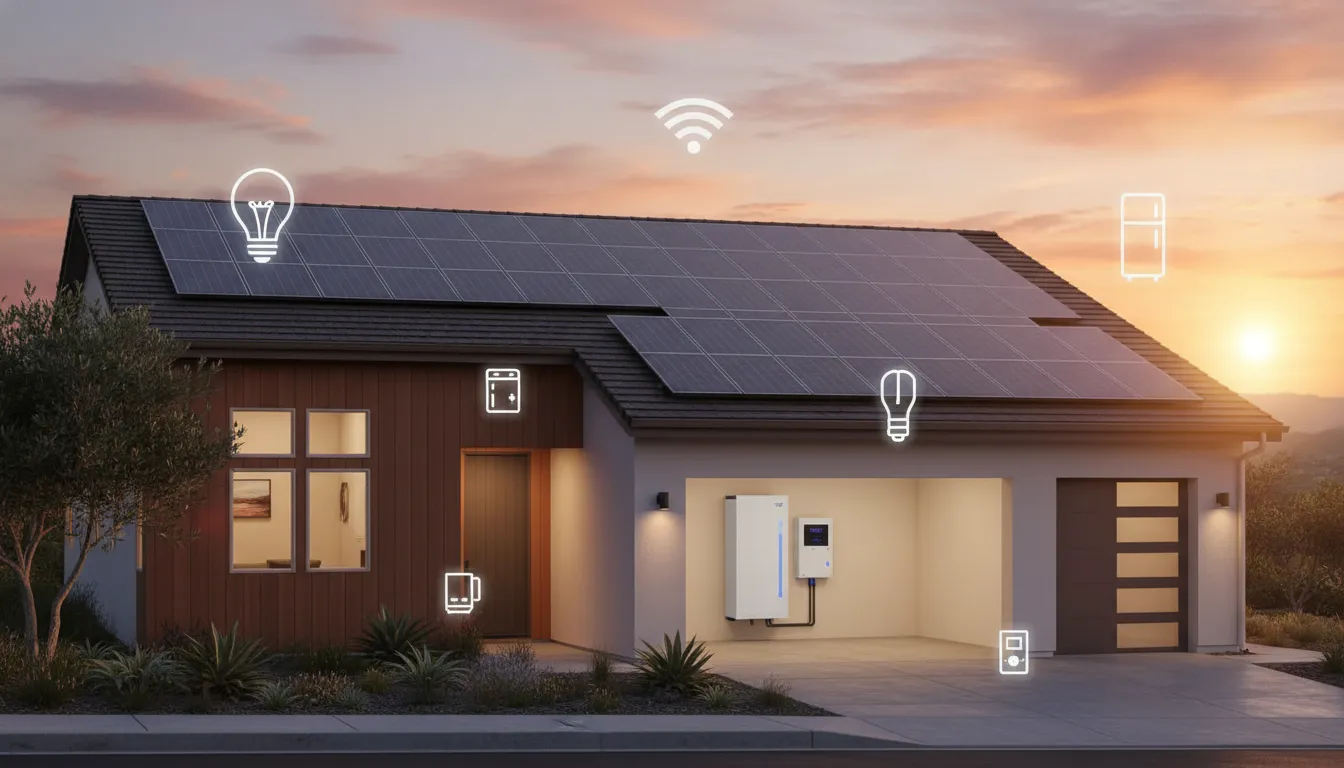
List each appliance or circuit, then estimate runtime. A refrigerator may cycle on and off all day. Wi-Fi and lights may run for several evening hours. A medical device may need dependable overnight power. Air conditioning, electric heat, and pumps require closer review because they can pull far more power than small household loads.
Once the list is built, the designer converts those loads into kilowatt-hours. That number is not the final answer, but it becomes the starting point for your battery capacity. The final design also needs to consider usable capacity, surge loads, inverter limits, and how your electrical panel will be configured.
If you already have solar, the design should also account for how much your array can recharge the battery during an outage. A battery that works well on a sunny afternoon may need a different strategy during smoke, rain, winter weather, or multi-day outages.
Use daily kWh and California utility patterns
Sun Solar Pros uses your electric bill to separate a realistic battery plan from a guess. It shows how much energy your home uses, usually in kilowatt-hours. A home that uses 18 kWh per day has a different storage profile than a home that uses 45 kWh per day, even if both homes have the same roof size.
Look at several months of usage, not just one bill. Summer air conditioning, winter heating, pool pumps, EV charging, and guests can change demand. In California, time-of-use rates also matter because the most expensive electricity often arrives in the evening after solar production has dropped.
Battery storage helps by holding excess solar power for later use. Under NEM 3.0, that daily shift can be just as important as emergency backup. A right-sized battery should support your outage plan while helping you use more of your own solar energy when rates are highest.
Adjust for usable battery capacity
Battery nameplate capacity is not always the same as usable capacity. Designers also account for depth of discharge, efficiency losses, reserve settings, and local code requirements. This is why exact recommendations should come from a professional review rather than a quick online calculator.
Sun Solar Pros uses these details to avoid overpromising. The goal is not to sell the largest possible battery. The goal is to design storage that fits your home, budget, panel setup, and backup expectations.
Review Sun Solar Pros home battery storage options before choosing equipment.
Essential-load backup vs whole-home backup
Sun Solar Pros often recommends essential-load backup when homeowners want practical outage protection without oversizing the system. It routes selected circuits to a backup panel so the battery protects the most important parts of the home. This approach can stretch stored energy further because it avoids powering nonessential loads during an outage.
Whole-home backup is more convenient, but it requires more careful sizing. Large appliances can drain a battery quickly. HVAC, electric dryers, electric ranges, and EV chargers can create demand spikes that require more equipment and a more advanced control strategy.
| Backup style | Best fit | Sizing focus |
|---|---|---|
| Essential-load backup | Refrigeration, lights, Wi-Fi, security, medical devices | Longer runtime for priority circuits |
| Whole-home backup | Homeowners who want most circuits available | Higher capacity, load management, and surge planning |
| Bill-savings storage | Solar homes under time-of-use rates | Evening energy shifting and solar self-consumption |
The right choice depends on how you define comfort during an outage. Some families are comfortable keeping essentials online. Others want the home to feel almost normal. Both can be valid, but they should be priced and designed differently.
Tesla Powerwall, Enphase, and custom storage options
Sun Solar Pros treats battery brand as the next step after the sizing discussion and helps homeowners compare equipment based on backup goals, existing solar hardware, available wall space, monitoring needs, and future expansion plans.
Tesla Powerwall is a strong fit for many homeowners who want sleek equipment, high usable storage, and a well-known backup platform. Multiple units can be combined when a home needs more capacity.
Enphase battery systems can be attractive when modular expansion and panel-level solar technology are priorities. Their design can scale in smaller steps, which helps homeowners build around specific circuits or future energy needs.
Sun Solar Pros also looks at the existing inverter setup, panel compatibility, permitting requirements, and service access. A battery that looks right on paper still needs to work with the home’s electrical system and local jurisdiction requirements.
Solar battery sizing checklist for California homes
Use this Sun Solar Pros checklist before your design consultation. It will help your solar educator move from rough estimate to a stronger recommendation.
- Gather 12 months of electric bills if available.
- Mark the circuits you want during an outage.
- Decide whether you want essential-load backup or whole-home backup.
- Estimate how many hours or days of backup you expect.
- Note major loads such as HVAC, EV charging, well pumps, pool pumps, or medical equipment.
- Identify whether you already have solar panels and what inverter system is installed.
- Review your time-of-use rate plan and evening energy demand.
- Plan for future changes, including EVs, heat pumps, additions, or more family members at home.
This checklist will not replace a professional load calculation, but it gives the design team the right facts. It also helps you compare proposals more clearly. If one quote ignores your outage goal or daily kWh use, it may not be sized for your actual home.
Common mistakes when choosing a solar battery size for home use
Sun Solar Pros sees one sizing mistake most often: assuming one battery size works for every California home. Two houses on the same street can have completely different needs because of HVAC equipment, insulation, appliance choices, EV charging, and family habits.
The second mistake is sizing only for total daily usage. During an outage, the battery does not need to run every device unless you choose whole-home backup. A critical-load design can provide better runtime by focusing stored power where it matters most.
The third mistake is ignoring recharge. Solar production changes by season, roof orientation, shade, smoke, and weather. If your battery is expected to carry the home through extended outages, recharge assumptions must be realistic.
The fourth mistake is overlooking installation details. Backup panels, transfer equipment, inverter limits, permitting, and utility rules affect what the system can do. A qualified local installer should explain those details before you approve the project.
Request a custom solar battery quote from Sun Solar Pros.
Frequently Asked Questions
How do I calculate the solar battery size I need?
Sun Solar Pros recommends starting with the appliances and circuits you want to back up. Estimate how many hours each one must run, then convert that usage into kilowatt-hours. A professional design will also adjust for usable battery capacity, inverter losses, surge loads, and solar recharge conditions.
Is one battery enough for a California home?
One battery may be enough for essential loads or evening bill savings. Whole-home backup often needs more capacity, especially if the system must support air conditioning, electric cooking, pumps, or EV charging. Your utility bills and circuit list should guide the recommendation.
Should I size for outages or utility bill savings?
Most California homeowners should consider both. Battery storage can protect critical circuits during outages and shift solar energy into expensive evening hours. Sun Solar Pros can model both goals so your system is not designed around only one use case.
Do Tesla Powerwall and Enphase batteries size the same way?
The sizing method is similar because both depend on load, runtime, and usable capacity. The equipment architecture differs. Tesla Powerwall can be a strong fit for larger storage goals, while Enphase systems can scale in modular steps. The best option depends on your home.
Ready to size your custom California home battery backup?
Sun Solar Pros designs battery storage around your home, not a generic online estimate, and brings local California permitting knowledge, premium battery options, and a consultative solar educator approach to every storage project.
Contact Sun Solar Pros today to schedule your custom solar battery quote.
Our team can review your usage, critical loads, outage goals, and solar setup so you know which battery storage option fits your home before you invest.