

Solar Panel Maintenance Tips Every Homeowner Needs
Your solar panels are built to last 25 years or more, but that does not mean you can install them and forget they exist. Dirt, leaves, bird droppings, and shifting shade patterns quietly chip away at energy production over time. The good news? A few straightforward solar panel maintenance tips can keep your system running at full capacity and protect your investment for decades.
solar panel maintenance service to make sure your system is performing at its best.
Whether your panels went live last month or ten years ago, this guide walks you through what to watch, what to clean, and when to pick up the phone for expert help.
Why Solar Panel Maintenance Matters
Solar panels have no moving parts, which is one reason they last so long. But “low maintenance” is not the same as “no maintenance.” Research from the National Renewable Energy Laboratory (NREL) shows that dirty panels can lose 5% to 25% of their energy output depending on location, tilt angle, and local conditions.
In California’s Central Valley and Southern California, dust from agricultural land, pollen, and seasonal wildfire ash are common culprits. Panels tilted at lower angles collect debris faster because rain cannot rinse them as effectively. Keeping tabs on your system means you catch small issues before they turn into expensive repairs or months of lost production.
How Often Should You Clean Your Solar Panels?
Most residential systems benefit from cleaning two to four times per year. The right schedule depends on your environment:
- Dusty or agricultural areas (Bakersfield, Fresno, Visalia): Every 3 months, especially during dry summer months when dust settles quickly.
- Coastal or suburban areas (San Luis Obispo, Santa Barbara): Twice a year is usually enough, once in spring after pollen season and once in fall.
- Near trees or power lines: Check monthly for bird droppings and leaf buildup. Even a single leaf covering a cell can reduce output from that entire string of panels.
A quick visual check from ground level every month takes five minutes and helps you spot problems early.
Safe Cleaning Methods for Solar Panels
Cleaning solar panels is simple, but doing it wrong can scratch the glass or void your warranty. Follow these steps:
- Use a garden hose with low pressure. Spray panels from the ground if your roof angle and hose reach allow it. Avoid pressure washers, which can crack glass or damage seals.
- Clean early in the morning or late in the evening. Panels heat up fast in direct sun. Spraying cold water on hot glass can cause thermal shock and micro-cracks.
- Use soft materials only. If you need to scrub, use a soft sponge or microfiber cloth attached to a telescoping pole. Never use abrasive pads, steel wool, or household cleaners.
- Stick to water or mild soap. A few drops of dish soap in a bucket of water handles stubborn grime. Skip anything with ammonia, bleach, or harsh chemicals.
- Stay off the roof when possible. If ground-level cleaning is not practical, hire a professional. Roof work carries real fall risks, and stepping on panels can crack cells beneath the surface.
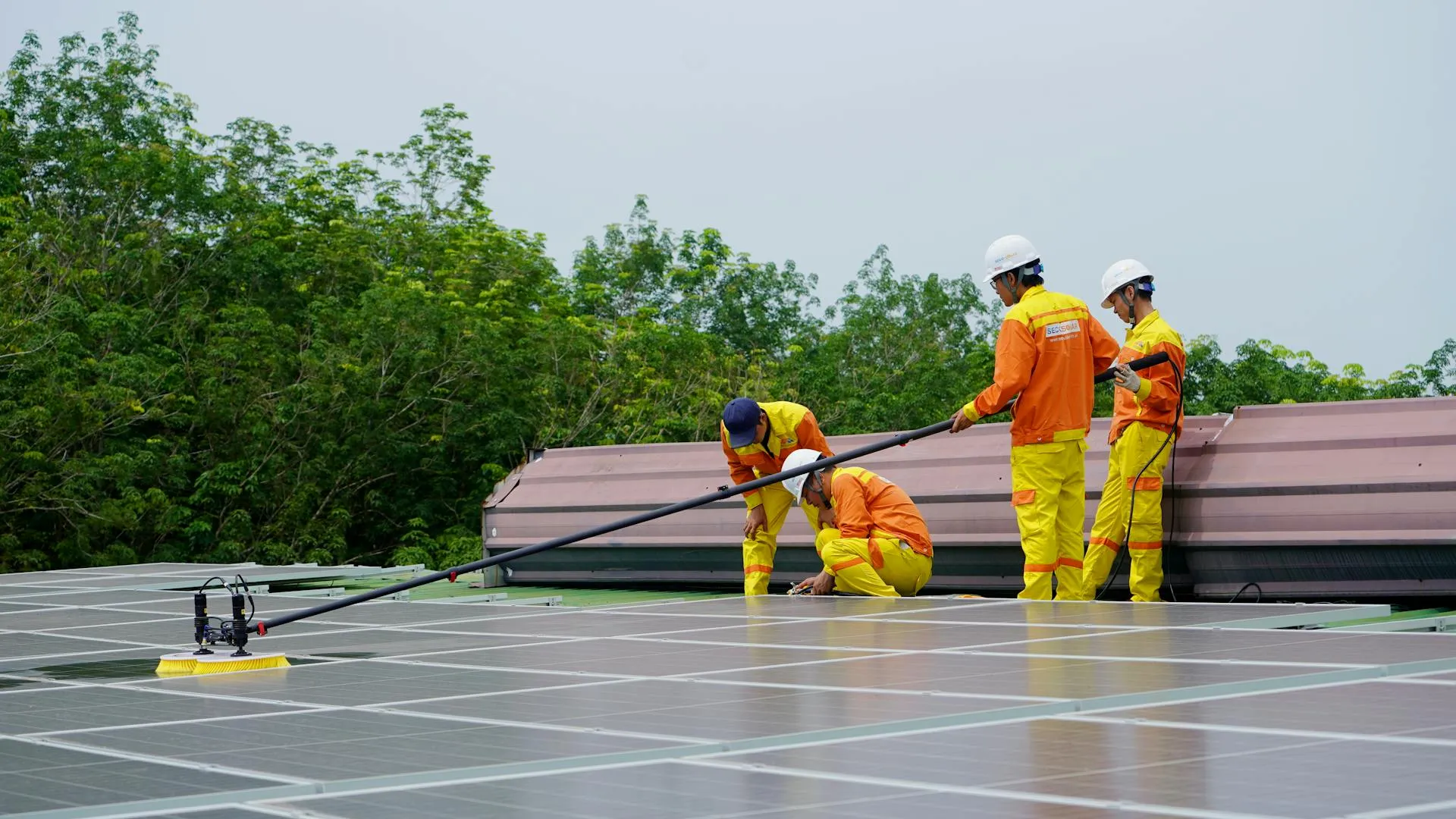
Prefer to leave the ladder work to the pros? Sun Solar Pros offers professional cleaning and maintenance across Central and Southern California.
Seasonal Solar Panel Maintenance Checklist
Print this out or save it to your phone. Walk through these items each season to keep your system in top shape.
Spring
- Rinse off pollen, dust, and any debris that accumulated over winter.
- Trim tree branches that have grown closer to panels since last fall. New spring growth can create shade that was not there six months ago.
- Check your monitoring app for any drops in daily production compared to the same period last year.
- Look at the ground beneath your panels for signs of water stains or rust on the racking, which could indicate a roof leak or corroded mounting hardware.
Summer
- Clean panels before the hottest months. Peak sun means peak production, but only if panels are clear. Review these summer solar performance tips for additional ways to optimize output.
- Watch for bird nests under panel arrays. Birds love the shade, and nesting material can block airflow and attract pests.
- Monitor inverter status lights or app alerts weekly. High temperatures can cause inverters to throttle or shut down temporarily.
- If you have a battery storage system, confirm it is charging fully during long summer days.
Fall
- Clear fallen leaves, especially after storms. A layer of wet leaves traps moisture and can promote mildew on panel frames.
- Inspect all visible wiring and junction boxes for signs of rodent damage. Fall is when critters look for warm spots near your roof.
- Schedule a professional inspection before winter. Technicians can catch problems like loose connections, micro-cracks, or degraded seals that are hard to spot from the ground.
Winter
- Check for standing water or debris after rainstorms. California winters bring brief but heavy rains that can deposit mud and grit on panels.
- Review your annual production data in your monitoring app. Compare year-over-year output to identify long-term performance trends.
- Confirm your solar incentive and warranty paperwork is up to date.
Common Issues to Watch For
Not every problem is visible from the ground. Here are the most frequent issues California homeowners run into:
Shading Changes
Trees grow. Neighbors build additions. A new fence or satellite dish can cast a shadow you did not expect. Even partial shade on one panel affects the output of the entire string in systems without microinverters. If you notice a production dip that does not match weather changes, shading is the first thing to investigate.
Debris and Soiling
Dust, bird droppings, pollen, and agricultural residue are the most common offenders in California. Bird droppings are worse than dust because they create “hot spots,” concentrated areas of shade that force the affected cell to absorb energy instead of producing it. Over time, hot spots can permanently damage cells.
Inverter Errors
Your inverter converts DC power from the panels into AC power your home uses. When it throws an error code, production stops until the issue is resolved. Common triggers include grid voltage fluctuations, overheating, and ground faults. Most modern inverter and panel systems include monitoring apps that alert you immediately.
Cracked or Damaged Panels
Hail, falling branches, and even thermal cycling can cause micro-cracks in solar cells. These are often invisible to the naked eye but show up as gradual production loss. An infrared inspection during a professional maintenance visit is the most reliable way to detect them.
Seeing something that does not look right? solar repair. Our NABCEP-certified technicians diagnose and fix issues fast.
When to Call a Professional
Some maintenance tasks belong in expert hands. Call a certified solar technician if you notice any of the following:
- Sudden production drops of 15% or more that do not match weather patterns or seasonal changes.
- Visible physical damage to panels, wiring, racking, or junction boxes.
- Inverter error codes that persist after a simple restart (check your manufacturer’s manual for reset instructions first).
- Roof leaks near panel mounting points. Water damage beneath panels needs immediate attention from both a solar tech and a roofer.
- Burnt smell or discolored wiring. This is a safety concern. Shut down your system and call immediately.
- Warranty or insurance claims. A professional inspection report strengthens your case and documents the issue properly.
Annual professional inspections are a smart investment even when nothing seems wrong. A trained technician with thermal imaging equipment can find micro-cracks, hot spots, and connection issues that are impossible to see from the ground. Sun Solar Pros includes performance testing, connection checks, and cleaning recommendations as part of every maintenance visit.
How to Monitor Your Solar Panel Performance
Your monitoring system is your first line of defense. Most residential solar systems come with an app (SunPower, Enphase, or SolarEdge) that shows real-time and historical production data. Here is what to track:
- Daily production: Compare today’s output to similar weather days in previous months.
- Panel-level data (if available): Microinverter and optimizer systems show production per panel. One underperforming panel often points to shading, soiling, or a hardware issue.
- Monthly and yearly trends: A slow decline over months could signal soiling buildup or panel degradation. A sudden drop usually means a specific component failed.
Set up push notifications for error alerts and production anomalies. Five minutes reviewing your app each week is one of the best solar panel maintenance tips you can follow.
Does Weather Affect Solar Panel Maintenance Needs?
California’s climate is generally kind to solar panels, but regional differences matter. In the Central Valley, summer dust and agricultural particulates mean more frequent cleaning. Coastal areas deal with salt spray that can corrode mounting hardware if left unchecked. Wildfire season brings ash that blocks sunlight and sticks to panels when combined with morning dew.
After any extreme weather event, do a visual inspection and check your monitoring app for production changes. For more on storm preparedness, read our guide on preparing your solar system for summer storms.
Frequently Asked Questions
How much does professional solar panel maintenance cost?
Professional cleaning and inspection typically runs $150 to $350 per visit for a standard residential system. The exact cost depends on system size, roof accessibility, and what services are included. Many homeowners find that one or two professional visits per year pays for itself through recovered energy production.
Can I use a pressure washer on my solar panels?
No. Pressure washers can crack the tempered glass, break cell connections beneath the surface, and force water into sealed electrical components. Use a standard garden hose with a gentle spray nozzle instead.
Do solar panels need maintenance if it rains regularly?
Rain helps, but it does not replace proper cleaning. Rain washes away loose dust but leaves behind sticky residue from bird droppings, tree sap, and pollen. Panels tilted at low angles collect puddles that dry into mineral deposits. Even in rainy climates, plan on at least one or two manual cleanings per year.
What voids a solar panel warranty?
Common warranty violations include using abrasive cleaners or tools, unauthorized modifications to the mounting system, and ignoring manufacturer-recommended maintenance schedules. Always check your warranty terms before attempting DIY repairs. When in doubt, call your installer.
How long do solar panels last without maintenance?
Solar panels are rated for 25 to 30 years, and most will continue producing electricity beyond that. However, neglected panels degrade faster and produce less energy each year. Regular maintenance keeps degradation rates closer to the manufacturer’s guaranteed levels (typically 0.5% to 0.7% per year) rather than letting them accelerate.
Keep Your Solar Investment Working Hard
Solar panel maintenance does not require special tools or a background in electrical engineering. Monthly visual checks, seasonal cleaning, and one professional inspection per year cover the basics. The payoff is steady energy production, lower utility bills, and a system that holds its value for the full life of your warranty and beyond.
If your panels are overdue for a checkup, or you have noticed a dip in production you cannot explain, Sun Solar Pros can help. Our NABCEP-certified team has maintained and repaired solar systems across Central and Southern California for over 15 years.
Connect with a Solar Educator today to schedule your maintenance visit or get a free quote on a new system.