

Solar Panels and Tesla Powerwall Package Guide
California homeowners are asking a more practical question than whether solar panels work: how should a home use that electricity after the sun goes down? Under NEM 3.0, exported solar power is compensated using avoided-cost rates. Using more energy at home or storing it for later is therefore an important part of the decision. The California Public Utilities Commission explains the NEM framework.
Ready to compare your solar and Powerwall options? Request a custom design from Sun Solar Pros.
A solar panels and tesla powerwall package can pair daytime generation with evening energy use and outage backup. The right combination depends on your utility rate plan, household consumption, roof, and electrical system. It also depends on whether you want to protect selected essentials or more of the home. Storage can shift solar electricity into evening hours, when time-of-use prices are often higher, as noted by the U.S. Department of Energy.
This is why the equipment list matters as much as the marketing label. A thoughtful design connects production, storage, controls, and backup priorities into one system, rather than treating the battery as an afterthought. Let us start with what a complete package is intended to include.
What Does a Solar Panels and Tesla Powerwall Package Include?
A solar panels and tesla powerwall package brings several pieces of an energy system together. The goal is not simply to place panels on the roof and add a battery. Each component must work with the home’s electrical service, roof, energy habits, and backup priorities. A thoughtful design helps the system produce useful electricity during the day, store surplus energy, and deliver power when the grid is unavailable.
Solar panels sized for the home
The panels are the daytime production engine. An installer reviews recent electricity use, seasonal patterns, available roof area, roof orientation, shading, and the home’s electrical capacity before recommending a system size. The result should reflect the home’s actual energy profile rather than a standard package applied to every property.
Future plans matter, too. An electric vehicle, heat-pump HVAC system, pool equipment, or other major load can change the amount of solar production that makes sense. The design should account for those decisions when they are known, while avoiding an oversized system that does not fit the roof or the home’s usage.
A Tesla Powerwall battery
The Powerwall stores electricity for later use. During sunny hours, the home can use solar power directly, with excess production directed to the battery. Later, the stored energy may support evening use or selected circuits during an outage, depending on the system configuration and available capacity. One battery may be appropriate for a home’s needs, while larger energy demands or broader backup goals may require more than one.
Battery sizing is based on more than the number of panels. The installer considers daily consumption, the loads the homeowner wants backed up, expected outage needs, and whether the priority is critical-load backup or broader whole-home coverage.
Inverter, backup hardware, and system controls
Panels and a battery need electrical equipment that converts, directs, and manages energy safely. The package can include an inverter, backup gateway or related transfer equipment, monitoring hardware, and the wiring and protection devices required for the installation. These controls help coordinate solar production, battery charging, household use, and the transition away from grid power during an outage.
Homeowners comparing system designs may also benefit from reviewing how a grid-tie solar power system with battery backup is configured. Sun Solar Pros handles design, engineering, installation, and long-term maintenance in-house as a certified Tesla Powerwall installer. That turnkey approach keeps the equipment and electrical decisions coordinated from the first site review through commissioning and ongoing service.
Why Is Solar Plus Storage More Useful Under California NEM 3.0?
California’s current net energy metering rules change the value of sending excess solar electricity to the grid. Under NEM 3.0, export compensation is based on avoided-cost rates. In practical terms, that makes it more important to use the electricity in your home or store it for a later hour. Do not assume every unused kilowatt-hour will receive the same value. The California Public Utilities Commission explains NEM 3.0 and its export-compensation structure.
A battery gives daytime production somewhere to go when your household is not using all of it. Solar panels can produce strongly while the sun is out, but many households use more electricity after work, during dinner, and into the evening. A Powerwall can hold some of that daytime energy so it is available when your home needs it. The U.S. Department of Energy notes that storage can shift solar electricity into evening hours, when time-of-use electricity prices are often higher. See its guide to using solar energy at home for additional context.
| Consideration | Grid-tied solar alone | Solar plus storage |
|---|---|---|
| Daytime solar production | Serves loads in the home first. Unused production may be exported to the grid. | Serves home loads first, with eligible excess production available to charge the battery before export. |
| Evening use | Household electricity usually comes from the grid after solar production falls. | Stored daytime energy can be used later, subject to system settings, battery capacity, and household demand. |
| NEM 3.0 response | More dependent on the compensation available for exported energy. | Provides more opportunity for self-consumption and controlled energy shifting. |
| Grid outage | Standard grid-tied solar generally shuts down during an outage for safety. | Backup equipment can isolate selected circuits or the home, allowing the battery and solar system to power supported loads. |
Outage behavior is another important distinction. A standard grid-tied system is designed to shut down when the utility grid goes down. Solar plus storage can provide backup for essential loads during an outage, a capability that grid-tied-only systems do not provide, according to research from the National Renewable Energy Laboratory. The exact result depends on how the backup system is configured. Some homeowners prioritize refrigeration, lighting, internet equipment, and selected outlets. Others may want a design that supports a broader set of household circuits.
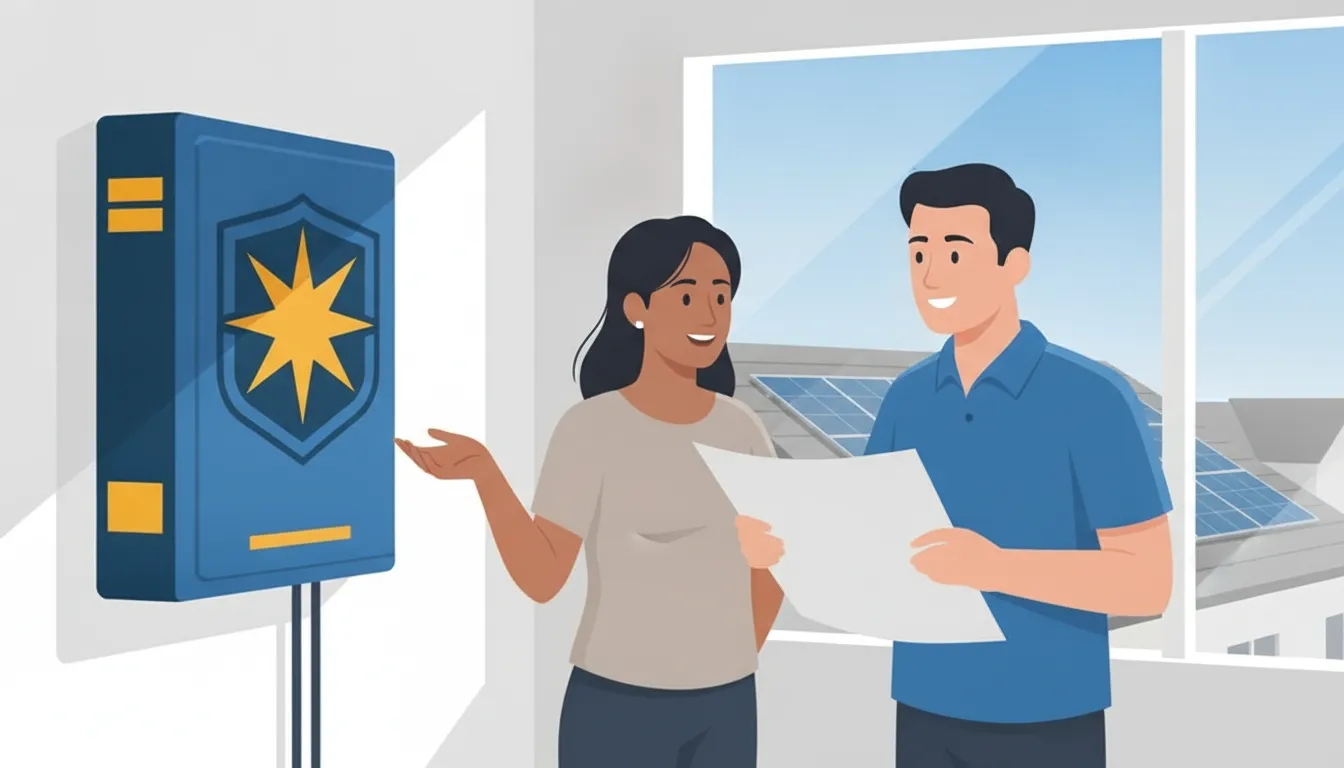
For a closer look at how these components work together, review this grid-tie solar power system with battery backup. The right design still depends on your utility territory, rate plan, daytime usage, evening demand, roof space, and outage priorities. Those details determine how much solar energy your home can use directly, how much storage is useful, and which circuits should receive backup power.
How Should You Size Panels and Powerwall Storage?
There is no single panel or battery size that fits every California home. A useful design starts with how your household uses electricity, then accounts for the roof, utility territory, backup goals, and plans to add larger loads. Panels are the daytime production engine; storage is the reservoir that helps shift that energy into the evening or keep selected circuits running during an outage.
Start with your actual electricity use
Review recent utility bills and, when available, interval usage data. Look for seasonal changes, evening-heavy consumption, air-conditioning demand, and the loads that operate overnight. A design based only on the size of the home can miss the habits that matter most. Note planned additions such as an electric vehicle, heat pump, induction range, pool equipment, or other electrification. Those future loads may affect panel production and backup planning, even if they are not yet visible on your bills.
Evaluate production limits on the roof
Roof orientation, shade, usable area, roof condition, and electrical layout all influence how many panels can be installed and how much they can produce. The goal is not simply to fill every open section. Your installer should compare expected production with your usage profile and identify whether the roof can support present and anticipated demand. If roof space is constrained, storage still requires a separate conversation about which energy should be reserved for later use.
Define critical loads versus whole-home backup
Critical-load backup might prioritize refrigeration, lighting, internet equipment, medical devices, or selected heating and cooling circuits. Whole-home backup aims for broader coverage and may require a different electrical design. Make a written list of the appliances and circuits that matter during an outage, including their starting demands. For a practical appliance-by-appliance explanation, see this guide to battery backup for home appliances.
Account for rate plans and outage priorities
Your utility territory and rate plan help determine when stored energy may be most useful. Under California’s NEM 3.0 rules, exported solar electricity is compensated using avoided-cost rates. So a design may place more emphasis on self-consumption and shifting solar energy into later hours. Time-of-use schedules, household routines, and the length or frequency of outages should be considered together, rather than treating the battery as an isolated product.
Have the complete system engineered together
A solar panels and tesla powerwall package may include panels, one or more Powerwalls, inverter equipment, backup hardware, and controls. The final configuration depends on the load calculation, available production, electrical service, and backup strategy. Ask for the assumptions behind the design and how future equipment could change them. A certified Tesla Powerwall installer can coordinate those decisions across design, engineering, installation, and commissioning, instead of sizing the battery separately from the solar array.
Should You Bundle the Battery or Add It Later?
Choosing storage during a new solar installation is not only an equipment decision. It also affects how the system is designed, permitted, wired, commissioned, and supported over time. Adding a battery later can be a practical option, but the best path depends on the solar equipment already in place and the way your household uses electricity.
| Consideration | Bundle during new installation | Add storage later |
|---|---|---|
| Compatibility | Panels, inverter, Powerwall, backup equipment, and controls can be selected as one coordinated system. | Existing panels and inverter must be evaluated first. The battery may need compatible integration equipment or a different wiring approach. |
| Electrical work | Electrical capacity, backup circuits, disconnects, and available installation space can be planned from the start. | The home may need an electrical upgrade, panel changes, new disconnects, or other work that was not part of the original solar design. |
| Permitting and coordination | One project can coordinate design, engineering, permits, installation, and commissioning. | A second project may require a new permit, utility coordination, site visit, and scheduling around the existing system. |
| Warranty and service | Equipment choices and installation responsibilities are documented together, creating a clearer service history. | Responsibilities may be split between the original solar installer, battery installer, and equipment manufacturers. |
| Flexibility | You commit to a larger project now, but can size the system around current needs and likely future priorities. | You can defer the storage decision while learning more about your usage, outage concerns, or utility rate plan. |
A bundle is often worth considering when backup is a priority, the home has suitable electrical capacity, and you already know that evening energy use will be important. A coordinated design can also clarify whether you need critical-load backup, such as refrigeration and communications, or a broader whole-home configuration. Neither choice guarantees a particular bill result. Roof space, utility territory, rate plan, household load, and future electrification plans all matter.
A later addition may make sense when the existing solar system is relatively new. The inverter architecture supports storage, and you want time to understand your consumption before selecting battery capacity. Compatibility is not automatic, especially when the existing system uses a proprietary or aging inverter. Review the practical questions in this guide to add a battery to my solar system before assuming a retrofit will be simple.
It is also useful to compare the equipment, electrical scope, permitting, and labor included in a proposal rather than focusing on a single line item. Our guide to solar battery price explains the cost factors without treating one system as a universal answer. Sun Solar Pros can evaluate either path and coordinate the design around your home, existing equipment, and long-term service needs.
What Does a Turnkey Solar and Powerwall Installation Involve?
A turnkey installation gives you one coordinated path from the first conversation to a working energy system. Instead of arranging solar, battery storage, electrical work, and service through separate companies, Sun Solar Pros manages the project as a complete design and installation. That approach can make the technical decisions easier to follow and gives you one local team to contact throughout the system’s life.
1. Consultation and home energy review
The process starts with a conversation about how your household uses electricity. What you want to keep running during an outage, and whether your priorities are lower grid dependence, backup capability, or both. The team reviews usage patterns, the home’s electrical service, roof conditions, available space, utility territory, and rate plan. Those details help determine whether a critical-load backup system or a broader whole-home design is the better fit.
2. System design and project planning
Sun Solar Pros then develops a system around the home rather than treating every installation as a standard package. The design may include appropriately sized solar panels, one or more Tesla Powerwall batteries. An inverter, backup equipment, and the controls needed to coordinate production, storage, and household demand. Future needs, such as an electric vehicle or heat pump, can also be considered during planning.
As a locally owned company serving Central and Southern California, Sun Solar Pros handles design and engineering in-house. Its team is a Certified Tesla Powerwall Installer, providing a qualified path for homeowners who want to combine solar generation with battery storage. Learn more about the available residential solar services and how they can be adapted to your property.
3. Permitting, installation, and commissioning
After you approve the design, the project moves through permitting and utility coordination. Installers place the solar equipment, connect the Powerwall and backup hardware, and complete the required electrical work. Commissioning follows installation. The team tests the system, confirms that the equipment communicates correctly, and explains how to monitor production, battery charge, and backup status.
4. Monitoring, maintenance, and financing choices
Turnkey support continues after the system is switched on. Monitoring helps identify how the system is performing, while long-term maintenance support gives you a local resource if service is needed. Sun Solar Pros handles installation and ongoing maintenance as part of its full-lifecycle approach. Financing options may also be available for qualified homeowners, so the right structure can be discussed alongside system design without relying on a one-size-fits-all promise. Visit the home battery storage page to explore the storage side of the conversation.
Ready to explore your solar and Powerwall options? Call Sun Solar Pros at 661-379-7000.
Frequently Asked Questions
How much does a Tesla Powerwall cost with solar panels?
There is no single package cost because the design depends on your electricity use, roof layout, panel capacity, battery quantity, electrical work, permitting, and backup goals. Your utility territory and rate plan also matter. Under California’s NEM 3.0 rules, exported solar energy is compensated using avoided-cost rates. A design that increases self-consumption or stores energy for later may therefore fit differently than an older system model. Ask for a site-specific proposal that separates equipment, installation, and available financing options. Source: California Public Utilities Commission.
Can I get a Tesla Powerwall if I already have solar panels?
Often, an existing solar system can be paired with a battery, but compatibility must be checked first. The installer should review your inverter architecture, panel and battery location, electrical service, available wall or floor space, and the loads you want backed up. Some retrofits require additional equipment or electrical upgrades. A professional assessment can confirm whether the existing system can support the planned battery and how the controls will operate during an outage.
Are Tesla solar panels and Powerwall worth it?
They can be worthwhile when the combined system matches your priorities. Those priorities may include using more of your own solar energy, managing time-of-use rates, or keeping essential circuits running during outages. Storage can shift daytime solar into evening hours, when electricity prices are often higher under time-of-use rates. The right answer depends on your utility, consumption profile, roof, financing approach, and resilience goals. Evaluate projected energy use and backup needs rather than relying on a universal payback promise. Source: U.S. Department of Energy.
Does the Tesla Powerwall come with solar panels?
No. Solar panels and a Tesla Powerwall are separate pieces of equipment, although they can be designed and installed as one coordinated package. Panels generate electricity, while the Powerwall stores energy and works with the system’s inverter and backup controls. Your installer should explain the proposed equipment, what will be backed up, and how the system will behave when the grid goes down. Standard grid-tied solar generally shuts down during an outage, while solar-plus-storage can power selected essential loads. Source: National Renewable Energy Laboratory.
Ready to Explore Your Solar and Powerwall Options?
A custom design can show how panel production and battery capacity fit your home’s energy use, roof, utility rate plan, and backup priorities. It also gives you a clearer view of the system’s expected economics before you decide. To request a tailored solar panels and Tesla Powerwall package design and quote, call Sun Solar Pros at 661-379-7000. A conversation with the team can help you compare practical options for your property without relying on one-size-fits-all assumptions.