

Why Is My PGE Bill So High? Solar Can Help
A PG&E bill can jump from one month to the next even when your household habits barely change. A hotter week, higher utility rates, or a few more hours of air conditioning can push more of your usage into expensive parts of the rate structure. PG&E also recorded five rate increases in 2024, making rate changes a bigger part of the monthly equation.
If you are asking, “why is my PGE bill so high?” the durable answer is usually not simply to use less electricity. A properly sized solar system can produce power at home, while battery storage saves that energy for the late afternoon and evening, when grid electricity often costs more. Together, they can reduce how much high-priced power your home needs to buy from PG&E.
Ready to lower your PG&E bill? Call 661-379-7000 for a free consultation.
Before deciding whether solar or a battery makes sense, it helps to understand what changed on the bill itself. The amount you pay is shaped by your home’s baseline allowance, the rate tier reached as usage rises, and the hours when that usage occurs. Seasonal conditions and extreme weather can add another layer, especially when cooling or heating runs for longer than usual. Once those pieces are separated, a high bill becomes easier to diagnose and the role of solar plus storage becomes clearer. The next step is to look at how baseline buckets and higher-cost tiers work, then connect them to the peak-hour charges that can magnify an otherwise ordinary month.
Why Is My PGE Bill So High? The Main Drivers
When a PG&E bill jumps, it is usually not one mystery charge. Several ordinary factors can stack up in the same billing period: higher utility rates. More electricity use, a hotter-than-usual month, and charges tied to the cost of operating California’s grid. Understanding which factor changed is the first step toward choosing a practical way to lower the bill.
Higher rates raise the cost of every kilowatt-hour
PG&E had five rate increases in 2024 alone, a record number of increases in one year. Rates have also risen by about 127% since 2010, making California electricity the most expensive in the continental United States. That means a home can use roughly the same amount of energy as it did in the past and still receive a much larger bill. Many customers saw bills run 20% to 30% higher in 2025, depending on their plan, usage, and location.
Wildfire-mitigation investments, regulatory costs, and seasonal changes are also built into the rates customers pay. These charges support real grid and safety work, but they still appear on the same monthly statement as your energy consumption. PG&E requests rate changes, and the California Public Utilities Commission reviews and approves those changes. The result for a homeowner is simple: the price per kilowatt-hour can change even when household habits do not.
Baseline buckets can make extra usage more expensive
PG&E’s baseline system divides electricity use into pricing buckets. Your first allowance is based on factors such as your climate zone and the season. Once your household uses more than that baseline allowance, additional usage moves into a higher-cost tier. The CPUC explains this as moving from one bucket to the next, where each kilowatt-hour costs more: see the CPUC’s explanation of baseline tiers.
This is why a small increase in consumption can sometimes have a bigger effect than expected. A family may run the air conditioner longer, charge an electric vehicle, or add another appliance during a heat wave. The added electricity may not only increase the number of kilowatt-hours used; it may push part of the bill into a more expensive bucket.
Extreme heat increases demand at the worst time
During extended hot weather, air conditioning and other cooling equipment can run for hours. Older or poorly maintained equipment may use even more energy, while heat can also increase demand from pool pumps, refrigerators, and fans. If that extra use occurs during expensive time periods or after the household has passed its baseline. The same heat wave can affect both usage and the price applied to that usage.
Start by learning to read your electric bill. Compare kilowatt-hours, the billing dates, baseline allowance, rate plan, and individual delivery or regulatory charges with a cooler month. That comparison helps separate a one-time usage spike from a long-term rate problem. Which is useful when evaluating whether solar, battery storage, efficiency improvements, or rate-plan changes fit your home.
How Do PG&E Time-of-Use Rates Raise Your Bill?
Time-of-Use, or TOU, billing prices electricity according to when you use it. That means two California homes can consume roughly the same number of kilowatt-hours and still receive different bills if one household uses more energy during PG&E’s evening peak period. Under common TOU schedules, peak hours run from about 4 p.m. to 9 p.m., when energy can cost as much as $0.62 per kWh. For context, the national average cited in rate comparisons is about $0.16 per kWh. The exact rate depends on your plan, but the basic pattern is what matters: timing can raise the price without raising total usage.
Why the evening window matters
Picture a typical Central California summer evening. Solar production is fading, but the household is just getting started. The air conditioner is still working after a hot day. Someone starts the electric oven, the dishwasher runs after dinner, and the family takes showers using an electric water heater. Each appliance uses energy at a time when the grid may charge more for it. If that routine repeats throughout the month, the bill can climb even though the family’s overall habits have not changed much.
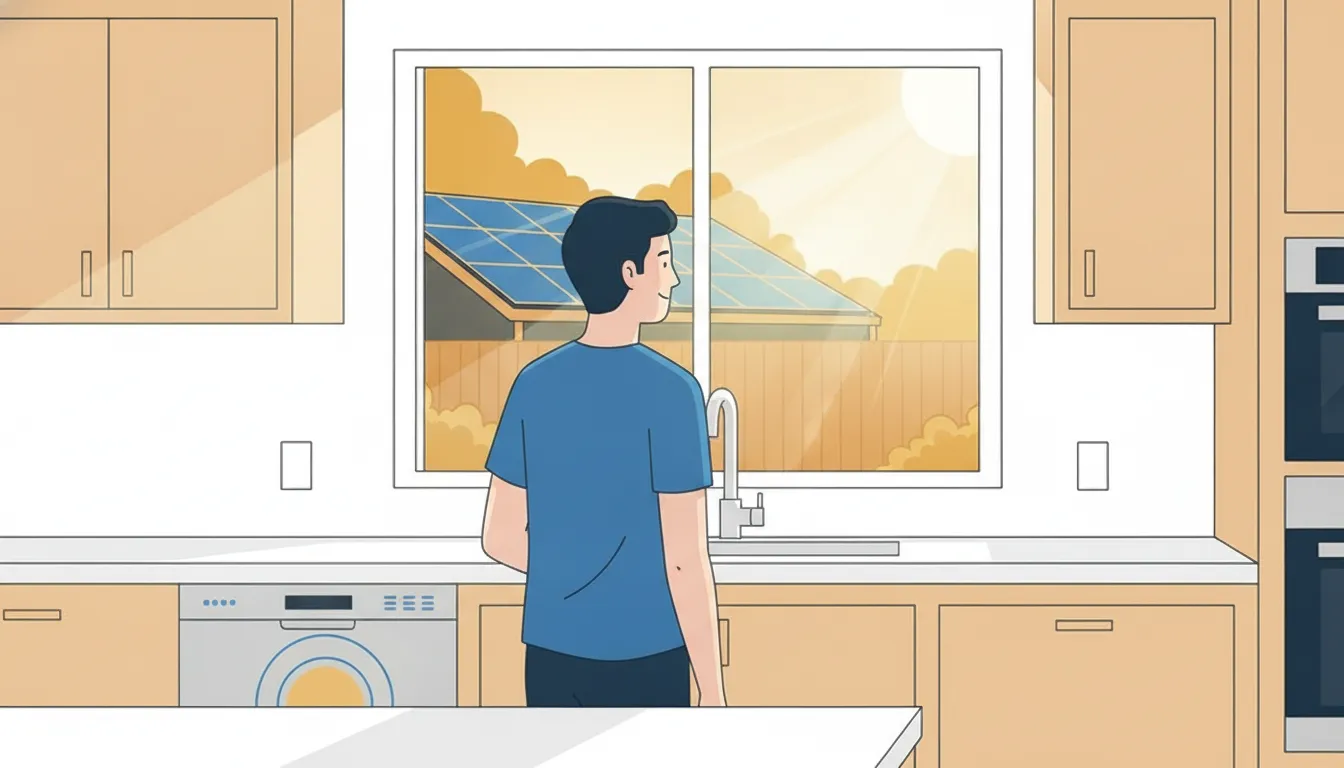
TOU rates do not mean every appliance needs to be used at inconvenient hours. They do give you a useful lens for reading the bill. Check the rate plan, identify the hours labeled peak, and compare your consumption during those hours with the rest of the day. Our guide to reading your electric bill can help you locate those details.
Baseline buckets can add another layer
PG&E billing can also use baseline allowances, sometimes explained as a series of buckets. Your first bucket covers a baseline amount based on factors such as your climate zone and season. Once usage exceeds that allowance, additional kilowatt-hours move into a higher-cost tier. The California Public Utilities Commission explains how baseline allowances and tiered pricing work in its electricity billing fact sheet.
In practice, TOU timing and baseline tiers can compound each other. A hot week may increase air-conditioning use, pushing the home beyond its baseline. If much of that added usage occurs between 4 and 9 p.m., those kilowatt-hours may also carry the higher peak price. This is one reason the answer to “why is my PGE bill so high?” is not always a single faulty appliance. The bill may reflect a rate structure that charges more for both when you use energy and how far your usage rises above the baseline.
What NEM 3.0 Means for Your Solar Savings
California’s Net Billing Tariff, often called NEM 3.0, changed the value of the electricity your solar panels send to the grid. Under the earlier net metering rules, exporting extra midday production could offset a larger share of electricity purchased later. Under the newer structure, export compensation is significantly lower, so sending surplus power away is usually less valuable than using it at home.
That does not make solar a poor investment. It changes the way a well-designed system should operate. The strongest savings usually come from increasing self-consumption, meaning you use more of your own solar energy instead of buying power from PG&E during expensive periods. The California Public Utilities Commission explains the Net Billing Tariff and its goals, including keeping daytime electricity affordable for customers who are electrifying their homes.
Solar alone: useful daytime savings, limited evening protection
Solar alone can cover a meaningful share of daytime demand. Running a heat-pump water heater, pool equipment, washing machine, or electric vehicle charger while panels are producing allows those appliances to use lower-cost energy directly. NBT rate designs keep daytime prices relatively low, which supports affordable daytime use of electric appliances.
The limitation appears after sunset. Solar production falls just as many households start cooking, heating or cooling the home, and using other major appliances. Any unused solar sent to the grid earlier in the day earns the lower export value, while evening electricity may cost more to purchase. In other words, solar alone can reduce the amount of power you buy, but it cannot store midday production for later use.
Solar plus battery: keep more of your energy at home
A battery gives that excess daytime energy another destination. Instead of exporting all surplus production, the system can store it and discharge it during evening demand or other high-cost time-of-use periods. This helps reduce grid dependence when solar is no longer producing and gives the household more control over when its energy is used.
The shift toward batteries is already clear. Nearly 70% of customers on the Net Billing Tariff had paired battery storage with solar by the end of 2024, according to the CPUC. That combination also helps manage the daily transition from solar-rich midday hours to evening demand, when California may otherwise rely more heavily on fossil-fuel power plants.
For homeowners comparing options, the practical question is not simply whether panels produce enough electricity. It is whether the system produces, stores, and uses energy in a pattern that matches the home’s schedule. Our guide to NEM 3.0 rules explains the tariff in more detail, while the net metering guide for California homeowners covers how the policy shift affects system planning.
How Solar Plus Battery Storage Lowers Your Net Bill
Solar panels and battery storage address two different parts of a high PG&E bill. Panels produce electricity when the sun is out, often during the same daytime hours when Net Billing Tariff rate designs offer lower prices. A battery stores excess production instead of sending it to the grid, then makes that energy available when household demand rises later in the day.
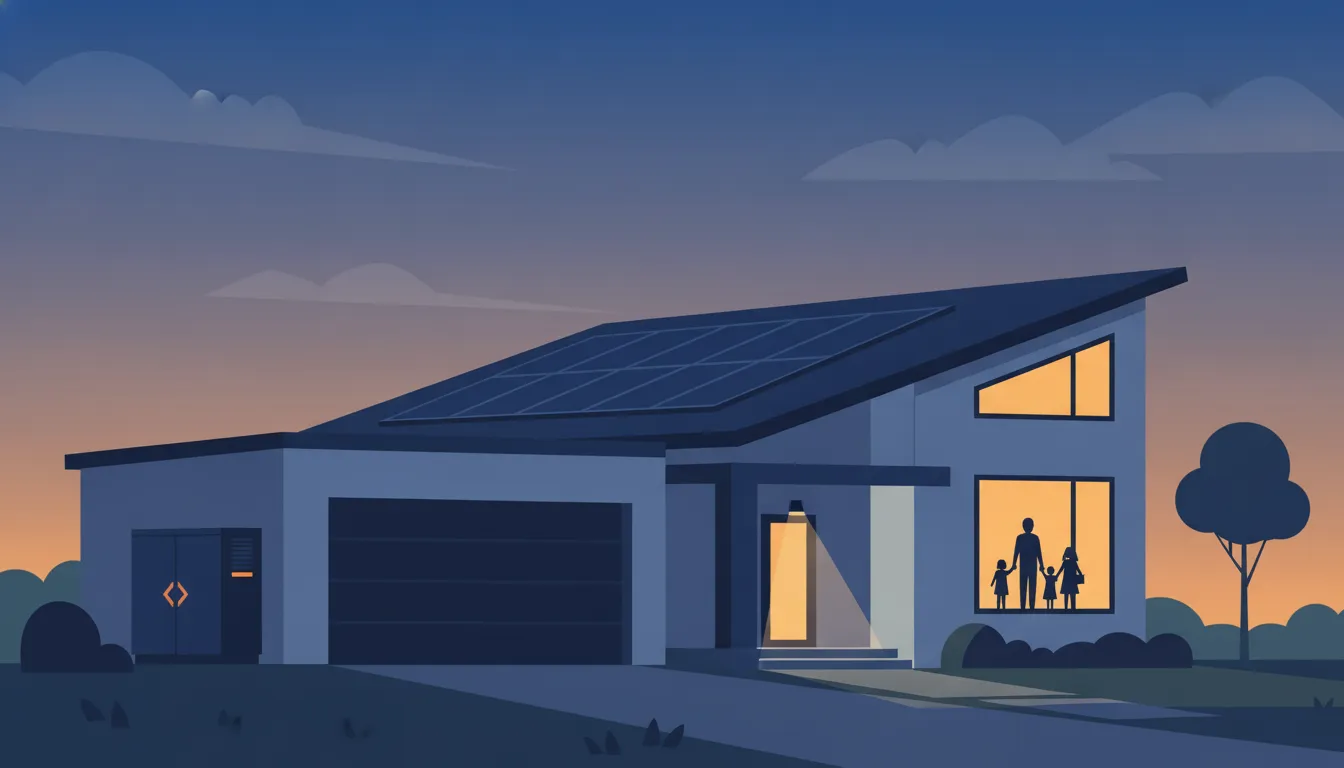
That timing matters most during the 4-9PM window. As solar production falls at sunset, homes are still cooking, cooling, charging vehicles, and running appliances. Without storage, those needs can pull expensive electricity from the grid. With storage, the home can use its own stored solar energy first, reducing the amount of power purchased at peak rates. The result is a smaller net charge and more control over when the home depends on PG&E.
| System | Typical behavior at 4-9PM peak | Reliance on peak grid pricing | Overall net bill impact |
|---|---|---|---|
| Grid-only | Buys electricity from PG&E as household demand rises. | High | Most exposed to peak charges and future rate increases. |
| Solar-only | Uses solar while it is available, then turns to the grid after production drops. | Moderate to high | Lower daytime purchases, but evening charges can remain substantial. |
| Solar + battery | Uses stored daytime solar during evening demand and can reserve energy for backup. | Lower | More solar self-consumption and less expensive peak-period energy purchased. |
Why the battery changes the calculation
Under California’s Net Billing Tariff, export rates are significantly lower than they were under earlier net-metering structures, which makes using more of your solar at home especially valuable. The CPUC explains the tariff and its rate design at its Net Energy Metering page. A battery helps shift solar from the time it is generated to the time it has the greatest value to your household.
Storage also smooths the home’s net load, meaning the difference between electricity use and on-site solar production. Instead of a sharp transition from abundant midday solar to heavy evening grid demand, the battery fills part of that gap. That supports greater energy independence while reducing reliance on fossil-gas power plants often called on as the sun sets and demand peaks.
Explore home battery storage to see how a system can fit your usage pattern, or review options for battery backup for home appliances. The right design depends on panel production, evening habits, critical loads, and the rate plan on your account. If you are asking, “why is my PGE bill so high?”. Comparing those factors can show whether shifting more of your own daytime energy into the evening would lower your net PG&E charges.
How Much Can a Solar Battery Actually Save You?
A battery does not make electricity disappear from your bill. It changes when you use the energy your solar panels produce, which is often the difference between modest savings and a much smaller monthly charge. Your panels typically generate the most power during the middle of the day. Under California’s Net Billing Tariff, daytime prices are designed to be relatively low. While the hours when many homeowners return from work, cook dinner, and run appliances can be more expensive. The CPUC explains the role of these daytime rate designs in its overview of the Net Billing Tariff: CPUC NEM information.
Instead of sending excess afternoon production to the grid and buying power back later, the battery stores that energy for your home. When peak time arrives, your lights, appliances, and other loads can draw from the battery first. That reduces the amount of high-priced electricity you purchase from PG&E. The result is a lower net charge month after month, especially in a home with meaningful evening usage.
Your rate plan and habits determine the payoff
There is no single savings figure that applies to every household. The financial benefit depends on your rate plan, how much electricity you use, when you use it, the size of your solar array, and the battery’s usable capacity. A household that consumes a lot of power between late afternoon and bedtime may have more peak-rate energy to replace than a household whose usage is concentrated during the day.
Battery sizing matters, too. A battery that is too small may run out before the evening demand period ends. A battery that is oversized may add cost without providing proportional bill savings. A careful review of twelve months of bills can show your actual usage pattern and help identify the right balance. If you are comparing solar batteries, look beyond the nameplate capacity and consider usable capacity, output, warranty terms, and how the system will operate with your rate plan.
Financing can make the savings strategy more manageable
The upfront price is only one way to evaluate a solar-plus-battery system. Sun Solar Pros offers financing options starting at about $99 per month, along with $0 down options for qualifying homeowners. Your payment, energy production, utility rates, and household usage should all be reviewed together. Financing does not guarantee that a system will eliminate your bill, and actual results vary, but it can make the move toward predictable energy costs more accessible.
For a complete assessment, start with your recent PG&E bills and a clear picture of your evening energy use. A residential solar review can compare your current charges with a system designed around your home, rather than relying on a generic savings estimate. Explore residential solar options to see how solar and storage may fit your budget and long-term energy goals.
Beyond Solar: Other Ways to Lower Your PG&E Bill
If you are still asking, “why is my PGE bill so high?” you do not have to wait for a solar installation to look for relief. A few PG&E assistance programs can lower the amount you owe now, especially if your household meets income or medical-need requirements. These options are worth checking while you consider longer-term ways to produce and manage your own electricity.
Check CARE and FERA eligibility
The California Alternate Rates for Energy, or CARE, program provides about a 20 percent discount on energy bills for qualifying households. Eligibility is based on household income or participation in certain public-assistance programs, so review the current requirements and apply through PG&E if you think you may qualify.
Households above the CARE income limits may still qualify for the Family Electric Rate Assistance, or FERA, program. FERA bills some electricity at a lower rate for qualifying moderate-income households. The discount structure differs from CARE, but it can still make a meaningful difference over the course of a year. The CPUC electricity fact sheet explains these programs and other rate-assistance options.
Ask about Medical Baseline
If someone in your home depends on qualifying medical equipment, ask PG&E about Medical Baseline. This program provides an additional energy allowance at the lowest rate, recognizing that medically necessary equipment can increase electricity use. Your healthcare provider may need to complete part of the application, so do not assume you are ineligible simply because your usage is higher than your neighbors’.
Understand your baseline and payment options
Baseline allowances are not identical for every customer. They vary by climate zone and season because the average energy needs of households differ across California. In practical terms, your allowance is a starting bucket of usage. Once consumption moves beyond it, additional electricity can be billed at higher-cost tiers. Checking the baseline allowance shown on your bill can help you understand whether a seasonal change. An unusually hot or cold month, or a larger household pushed usage into those tiers.
If a bill is difficult to pay, contact PG&E before it becomes overdue. Utilities may offer cash assistance or special payment plans for customers facing financial hardship. Asking early gives you more options than waiting until a balance has accumulated.
These programs can provide valuable short-term breathing room, but they do not change the underlying cost of buying power from the grid. A free consultation can help you compare those immediate options with a longer-term solar and battery plan. Including how much of your daytime energy can be stored for evening use. The goal is not to push a one-size-fits-all answer. It is to close the gap between temporary bill relief and a more predictable energy strategy.
Frequently Asked Questions
Why is my PG&E bill so high?
High bills usually come from a combination of higher rates, increased usage, and when you use electricity. Extreme heat or cold can drive consumption up, while rate changes, wildfire-related costs, and regulatory charges raise the price of each kilowatt-hour. Baseline allowances also matter: once your household uses more than its allowance, additional usage can move into higher-cost tiers. Reviewing your usage, rate plan, and charges separately can show which factor is doing the most damage.
Do time-of-use rates increase my electric bill?
They can. Time-of-use rates charge different prices depending on the hour. So running major appliances during a peak period can raise your bill even when your total monthly usage stays about the same. Shifting laundry, dishwashing, electric-vehicle charging, and other flexible loads to lower-cost hours may help. A careful review of your hourly usage and current rate plan is the best way to determine whether TOU pricing is a major contributor.
How does NEM 3.0 affect solar savings in California?
NEM 3.0, also called the Net Billing Tariff, reduced the credit many new solar customers receive for exporting unused daytime electricity to the grid. That makes using more of your solar power at home more valuable than exporting it. The California Public Utilities Commission explains the current Net Billing Tariff. A battery can store daytime production and make it available during evening demand, when grid electricity is often more expensive.
Can adding battery storage help lower my high PG&E bill?
Yes, when the system is sized and programmed for your home and rate plan. Solar can cover daytime loads, while the battery stores excess production for later use. During expensive evening hours, that stored energy can reduce how much electricity you buy from the grid. Battery savings vary with system size, household usage, weather, rate plan, and charging settings, so a bill and interval-usage review should come before choosing equipment.
Ready to Take a Bigger Bite Out of Your PG&E Bill?
If you keep asking, “why is my PGE bill so high?”. The answer often comes down to how much expensive peak-hour electricity your home buys from the grid every month. Solar panels generate power when sunlight is available, and a battery stores that energy for the late afternoon and evening, when PG&E rates are highest. Together they can shift more of your household load onto energy you produce yourself, reducing the amount of high-priced grid power you pay for.
As a local solar and battery installer serving Central and Southern California since 2008. Sun Solar Energy Solutions helps homeowners match a system to their actual usage, rate plan, and roof. With financing options from around $99 per month and premium, CEC-listed panels installed by NABCEP-certified technicians, the path to a more predictable bill starts with a conversation.
Get your free solar and battery consultation. Call 661-379-7000 today.